- Save Money: Growth-friendly bikes, like balance-to-pedal convertibles, eliminate the need to buy multiple bikes. Some models cost under $100, while high-quality options like the ZUKKA Zoomer 16" are just $119.
- Key Features: Prioritize adjustable seats and handlebars, lightweight frames (no more than 30% of your child’s weight), and durable materials like aluminum for easy handling and long-term use.
- Safety First: Look for bikes with both coaster and hand brakes, air-filled tires for better grip, and stability-focused designs to support beginners and confident riders alike.
- Sizing Tips: Measure your child’s inseam and match it to the bike’s seat height. Use the wheel size chart to find the best fit for their age and height.
Why It Matters:
A well-chosen bike helps kids build balance, strength, and confidence while saving you money and reducing waste. Whether it’s your child’s first balance bike or a convertible pedal bike, the right choice makes their riding experience safer and more enjoyable.
Quick Tip: Always measure your child’s inseam and choose a bike with adjustable features to ensure a proper fit now and room for growth.
Toddler Bike Buying Guide
Key Features of Bikes That Grow with Your Child
When picking a toddler bike, look for features that ensure it can adapt to your child's development over time.
Adjustable Parts
A good toddler bike should have at least 3 inches of adjustable seat and handlebar height. Features like tiltable handlebars and a low step-over frame make it easier for kids to mount and ride comfortably as they grow. This level of adjustability typically supports one to two years of growth for most toddlers.
Some bikes go a step further, offering extra flexibility in both seat and handlebar adjustments. These features not only enhance comfort but also allow the bike to keep up with your child's changing needs. Alongside adjustability, the bike's overall build quality plays a huge role in its longevity.
Strong Materials and Build Quality
The frame material is a critical factor in a bike's durability and ease of use. Aluminum alloy frames are a popular choice for growth-friendly bikes because they’re rust-resistant and lighter than steel. Weight matters - a lightweight bike is much easier for toddlers to handle. While some mass-market bikes might weigh up to 75% of a child’s body weight, a well-designed balance bike should weigh no more than about 30%. The lighter the bike, the easier it is for kids to steer, stop, and even pick up if it tips over.
High-quality materials and genuine parts reduce the risk of bending or breakage, ensuring the bike lasts through years of use. Air-filled tires are another important feature, as they offer better cushioning and grip compared to foam tires, making the ride smoother and safer. These durable components set the stage for another key feature: easy conversion options.
Easy Conversion Features
Convertible balance-to-pedal bikes are a game-changer, offering usability across multiple developmental stages. These bikes transition from balance mode to pedal mode, eliminating the need to buy separate bikes as your child grows. This can save significant money - purchasing two high-quality bikes separately could cost over $700.
Many models make the switch from balance bike to pedal bike simple, often featuring quick pedal installation systems. Some even come with modular or extendable designs, making them suitable for long-term use or even as a hand-me-down for younger siblings. Conversion kits, usually sold separately, add another layer of versatility by allowing you to add pedals when your child is ready.
Additionally, quick-adjust systems - like lever-operated clamps or tool-free mechanisms - make it easy to maintain the bike’s fit as your child grows, ensuring both comfort and safety throughout its use.
Sizing and Age Guidelines for Toddler Bikes
Picking the right bike size is key to ensuring your child’s safety and comfort while riding. While age can provide a general idea, using your child’s height and inseam measurements is a much more reliable way to find a bike that fits well now and has room for growth.
The inseam - measured from your child’s crotch to the ground - is particularly important. It determines whether they can comfortably touch the ground while seated, which is crucial for building confidence and maintaining control. Below, you'll find a guide to help match your child’s measurements to the perfect bike size and seat adjustments.
Wheel Size Guide
Unlike adult bikes, kids’ bikes are sized by wheel diameter rather than frame size. Here’s a quick reference chart to pair your child’s height, inseam, and age with the appropriate wheel size:
| Wheel Size | Age Range | Height Range | Inseam Range |
|---|---|---|---|
| 12" | 2 to 3 years | 36" – 39" | 15" – 18" |
| 14" | 2 to 4 years | 37" – 44" | 15" – 20" |
| 16" | 4 to 6 years | 41" – 48" | 16" – 22" |
| 20" | 5 to 8 years | 45" – 54" | 19" – 25" |
| 24" | 8 to 11 years | 49" – 59" | 23" – 28" |
To measure your child’s height, have them stand straight against a wall. For the inseam, ask them to stand with their back and heels against the wall while wearing shoes. Place a hardcover book snugly between their legs, with the spine pressing against their crotch. Measure from the floor to the top of the book to get their inseam.
Growth Stages and Bike Adjustments
Once you’ve nailed down the measurements, it’s time to adjust the bike for maximum comfort and control. Your child’s experience level also plays a role in how you set up their bike. Here are some tips for adjusting the seat height:
- For balance bikes, set the seat 0.5" to 1.5" below the inseam to help with stability.
- On pedal bikes, beginners should have the seat set at the inseam, while experienced riders can handle it 2" to 4" above the inseam.
- If training wheels are being used, the seat can be set up to 3" above the inseam, as the extra stability compensates for the height.
When selecting a bike that can grow with your child, look for models where the minimum seat height aligns closely with their current inseam measurement. Additionally, ensure there’s about 1" to 2" of clearance between the top tube and your child’s crotch when they straddle the bike. This standover clearance makes mounting and dismounting easier and safer.
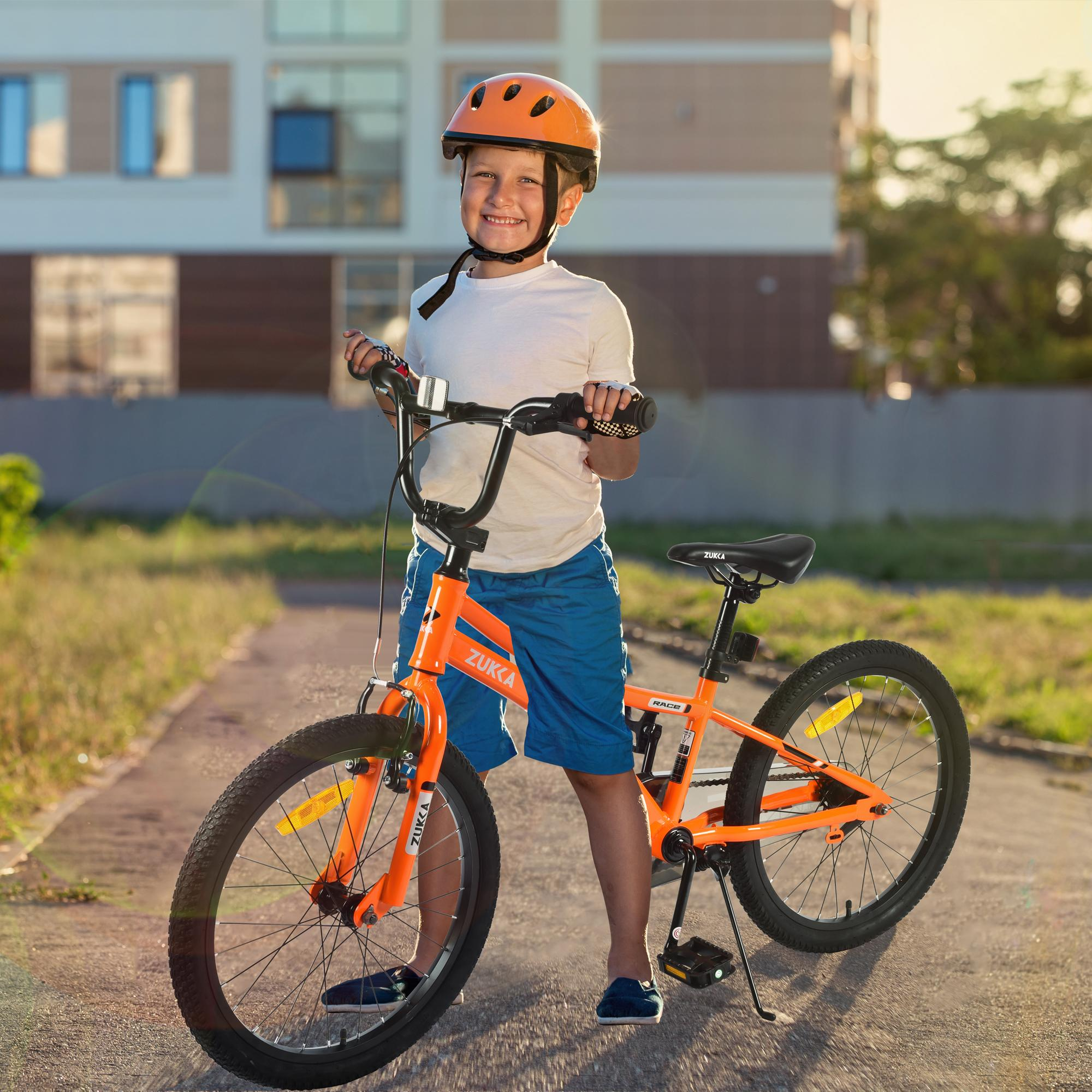
Some bikes, like the ZUKKA Zoomer 16" Kids' Bike, are designed with adjustable features to accommodate a growing child. With the right fit, your child can enjoy riding comfortably and confidently from day one.
Safety Features for Growing Riders
As kids transition from wobbly beginners to confident cyclists, their safety needs naturally evolve. A bike should not only keep up with their growing skills but also provide reliable safety features at every stage. By focusing on adaptable safety elements, you can ensure the bike grows with your child, offering a secure and enjoyable riding experience.
Brake System Evolution
For young beginners, coaster brakes - activated by pedaling backward - are the go-to option because of their simplicity. However, as kids gain confidence, introducing hand brakes or V-brakes helps them develop better control and prepares them for riding larger bikes. According to the Consumer Product Safety Commission, bikes with seat heights under 25 inches are required to have coaster brakes. Many modern bikes combine coaster and hand brakes to make this transition smoother. For instance, the ZUKKA Zoomer 16" Kids' Bike comes equipped with dual braking systems, making it easier for kids to adapt as their skills progress. V-brakes, often found on first pedal bikes, are specifically designed for smaller hands and require less strength to operate, while hand brakes provide extra stopping power for varied terrains. Together, these systems create a safer, more versatile riding experience.
Stability and Balance Features
Stability is a game-changer for kids learning to ride. Bikes designed with a low center of gravity help young riders maintain control, reducing the risk of falls. Wide, air-filled tires not only improve grip but also absorb bumps, making rides smoother and boosting confidence on uneven surfaces. Frame geometry also plays a big role: a longer wheelbase and features like steering limiters can prevent sharp turns that might lead to crashes, offering a more stable ride overall.
Durable Materials and Frame Strength
As children become more adventurous, their bikes need to withstand the wear and tear of active use. Aluminum frames are a popular choice - they’re lightweight, rust-resistant, and built to handle the demands of energetic riders. To ensure easier handling, a child’s bike should weigh no more than 40% of their body weight. Heavier bikes can be harder to control, especially during sudden stops or tight maneuvers. Using sturdy, well-tested materials throughout the bike’s construction adds an extra layer of safety, protecting against impacts and falls.
Regular maintenance is equally important. Keeping tires properly inflated, oiling the chain, and checking that handlebars, seats, and brakes are secure can make a big difference in preventing accidents. With about 254,000 children injured in bicycle-related accidents each year, prioritizing safety features like advanced braking systems, stability-focused designs, and durable construction is essential for keeping your child safe as they grow and explore on two wheels.
sbb-itb-4ec432b
Long-Term Value of Growth-Friendly Bikes
When you're on the hunt for a toddler bike, choosing one that's designed to grow with your child can save you money in the long run while also being a smarter, more sustainable option.
Cost Savings Over Time
An adjustable bike can last your child 3–4 years, compared to traditional bikes that often need replacing after just 12–18 months. For example, the ZUKKA Zoomer 16" Kids' Bike costs $119.00 and is designed for children ages 4–7, with adjustable features that accommodate kids between 41" and 45" tall. In contrast, buying a new bike every time your child grows out of one quickly becomes much more expensive.
Another bonus? Quality bikes like ZUKKA retain 80–90% of their resale value. Plus, they’re built with steel frames and durable components, reducing the need for frequent repairs or replacements compared to cheaper, less reliable alternatives. These features mean you save both time and money in the long run.
To top it off, ZUKKA offers excellent customer support and warranty coverage, adding even more value.
Warranty and Customer Support
ZUKKA goes the extra mile with its customer care. Their bikes come with a 3-month warranty that covers manufacturing defects and a 30-day return policy, giving you peace of mind as your child learns to ride. They also provide maintenance tips, like how to keep the chain lubricated and the tires properly inflated, ensuring your bike stays in great shape.
In November 2024, one parent shared their experience with the ZUKKA Zoomer 16". They noted that the bike was a breeze to assemble - taking just 20 minutes - and their child mastered riding without training wheels in just two weekends. The parent summed it up by saying, "Worth every penny for the confidence it's given him!".
Environmental Benefits
Beyond saving money, growth-friendly bikes are better for the planet. Cycling emits only 16–50 grams of CO₂ per kilometer. Families who swap short car trips for bike rides can cut travel emissions by around 75%.
It doesn’t stop there. Bikes built to last also reduce waste and resource consumption by eliminating the need for frequent replacements. This is especially important when you consider that aluminum production - a common material in bike frames - accounts for about 1.1 billion tons of CO₂ annually, or roughly 2% of global greenhouse gas emissions.
"Cycling causes virtually no environmental damage, promotes health through physical activity, takes up little space and is economical, both in direct user costs and public infrastructure costs. In short, cycling is environmentally, socially and economically sustainable." – Pucher and Buehler
By choosing a bike that grows with your child, you’re not just saving money and enjoying reliable support - you’re also making a greener choice. Every adjustable bike purchased helps reduce waste and keeps more bikes out of landfills.
Growth-friendly bikes are a smart investment that pays off in lasting value and supports a more sustainable way of life.
Conclusion: Making the Right Choice for Your Child
Let’s wrap up the key points to help you pick the best toddler bike for your little one.
When choosing a bike that grows with your child, focus on a few essentials: adjustable components, safety features, a lightweight frame, and durable materials. These factors ensure the bike not only lasts but also supports your child’s confidence and development over time.
Take the ZUKKA Zoomer 16" Kids' Bike as an example. At $119.00, it’s built for kids aged 4–7 and offers a smart mix of sturdy construction and thoughtful design, making it a great choice for young riders.
Before committing to a bike, measure your child’s inseam (with shoes on!) to get the right fit. If possible, let them test out a few models and talk to other parents for real-world insights.
Research shows that learning on a well-designed bike helps kids develop balance, strength, and coordination - skills that boost their confidence on the bike and beyond. The right bike isn’t just a toy; it’s a tool for growth, adventure, and creating unforgettable memories.
FAQs
How can I choose the right wheel size for my toddler's bike based on their height and inseam?
To find the right wheel size for your toddler's bike, start by measuring their inseam while they’re wearing shoes. Have them stand straight against a wall, and use a book to measure from the floor up to their crotch. This inseam measurement is the most accurate way to determine the correct bike size.
Here’s a quick guide:
- A 12-inch bike usually suits toddlers with an inseam of 14–17 inches.
- A 16-inch bike is better for inseams ranging from 18–22 inches.
Focusing on the inseam rather than overall height ensures a safer, more comfortable fit. Also, choosing a bike with adjustable features like a height-adjustable seat and handlebars can make it easier to accommodate your child as they grow.
What are the advantages of choosing a bike with both coaster and hand brakes for your child?
Choosing a bike equipped with both coaster brakes and hand brakes can be a smart choice for a child who's learning to ride. Coaster brakes, which work by pedaling backward, are simple and intuitive - perfect for younger kids just starting out. They offer an easy way for beginners to stop without needing to coordinate their hands.
As children grow more confident and start riding in different conditions, hand brakes come into play. These provide better control and stronger stopping power, helping them handle more advanced riding situations. Having both types of brakes on the same bike lets kids gradually get used to hand brakes while still relying on the simplicity of coaster brakes. This dual system not only boosts safety but also helps build their skills and confidence as they prepare for more complex bikes down the road.
Why should I choose a lightweight aluminum bike for my toddler?
Why Choose a Lightweight Aluminum Bike for Your Toddler?
Picking a lightweight aluminum bike for your toddler can make a world of difference in their riding experience. A lighter bike is much easier for little ones to handle, giving them the confidence to steer, balance, and stop without struggling. Plus, it’s light enough for them to pick up or move on their own, which helps build their sense of independence.
There’s also a safety advantage. Lightweight bikes are less cumbersome, making them easier to control and reducing the risk of injury if your toddler takes a tumble. By choosing a lightweight aluminum bike, you’re setting your child up for a more enjoyable, safer, and hassle-free way to learn and love riding.