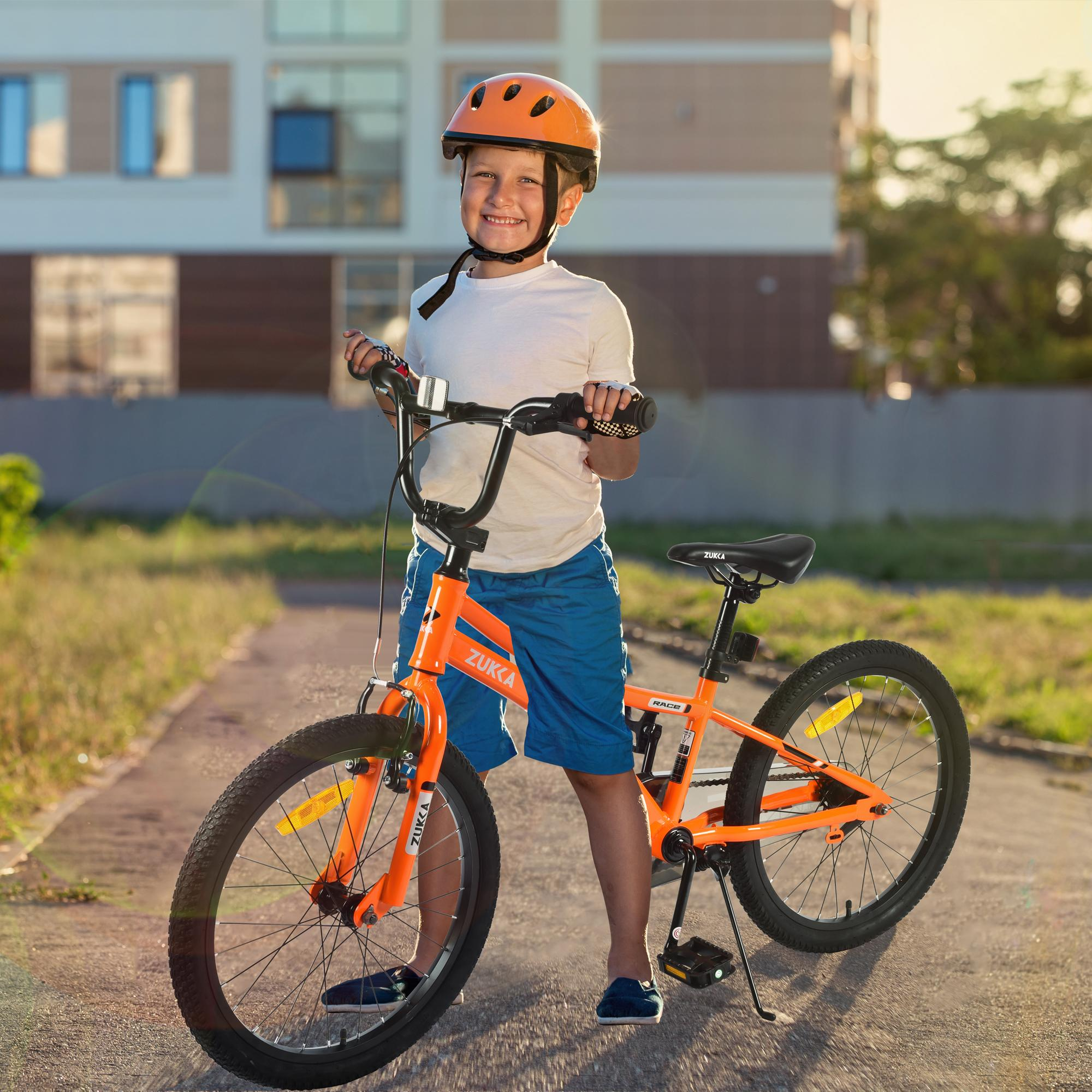
Imagine the joy of seeing your child pedal their first bike, grinning ear-to-ear with a sense of newfound freedom. Getting the right size bike is the golden ticket to ensuring that their adventures are safe, comfortable, and fun.
For children aged 4-10, ZUKKA offers a fantastic range of kids' bikes.
The ZUKKA Kids Bike, available in vibrant colors, features a 20-inch wheel suitable for boys aged 7-10 years and is built from durable steel, ensuring longevity and safety.
For younger riders aged 4-7, the ZUKKA Kids Bike with a 16-inch wheel and training wheels provides stability and confidence as they learn to ride.
With thoughtful design and robust materials, ZUKKA bikes are perfect companions for outdoor adventures.
In this guide, we’ll walk you through the essentials of measuring kids’ bike sizes, so you can confidently choose the perfect ride for your little one.
Understanding Bike Sizes for Kids
Concept of Bike Sizing
Bike Sizing for Kids: Ensuring Comfort and Safety
- Importance of Size:
- Choosing the right bike size is crucial for your child's comfort and safety.
- A bike that’s too big can be hard to control, leading to accidents.
- A bike that’s too small can restrict growth and hinder the riding experience.
- Benefits of Proper Sizing:
- Easier maneuverability
- Better balance
- Development of essential cycling skills
When kids ride bikes that fit well, they can enjoy safer and more fun experiences on two wheels.
Tip: Always measure your child and adjust the bike for maximum confidence and enjoyment!
Bike Size Categories
Kids' bikes are typically categorized by wheel size and age range. Common sizes include 16-inch and 20-inch wheels, which cater to different age groups and skill levels. Here's a quick overview:
|
Age Range |
Wheel Size |
Features |
Suitable For |
|
4-7 years |
16 inches |
Training wheels for stability |
Beginners learning to ride |
|
7-10 years |
20 inches |
Durable steel frame |
Intermediate riders ready for more adventure |
Understanding these categories will help you make an informed decision on the best bike for your child’s age and development stage.
EXPLORE ZUKKA 4-7 and 7-10 Year Ages 16 and 20 Inches Bikes.
Measuring Bike Size for Ages 4-7
What Size Bike for a 4-Year-Old

For 4-year-olds, a 16-inch bike is often the ideal choice, providing the perfect balance between size and manageability for young riders. These bikes usually come equipped with training wheels, which offer the stability that children need as they embark on their journey to learn how to balance and pedal effectively. The presence of training wheels helps build confidence, allowing kids to focus on mastering the basics of cycling without the fear of falling.
Tips for Choosing:
- Check Adjustable Features: When selecting a bike, ensure it has adjustable seat and handlebars. This feature is crucial as it allows the bike to grow with your child, accommodating their height and development over time. This means you won’t have to purchase a new bike every year, making it a more economical choice.
- Lightweight and Easy to Handle: Opt for a bike with a lightweight frame. A lighter bike makes it significantly easier for your child to maneuver, control, and stop the bike, which is especially important as they are still developing their coordination and strength. This ease of handling will encourage them to ride more often, further honing their skills and boosting their confidence.
What Size Bike for a 5-Year-Old

Five-year-olds have the option to either stick with a 16-inch bike or transition to an 18-inch bike, depending on their individual skill level and height. This age marks a pivotal moment in their cycling journey, making it a great time to consider removing training wheels if your child has shown readiness and confidence. Transitioning to a larger bike can enhance their riding experience and encourage independence.
Features to Look For:
- Adjustable Components: Just like the 16-inch model, it's crucial to ensure that the seat and handlebars of the 18-inch bike are adjustable. This allows for proper fit as your child grows, ensuring comfort and safety while riding.
- Easy-to-Use Brakes and Sturdy Frame: Safety is paramount in selecting a bike for young children. Look for models with reliable, easy-to-use brakes that your child can operate effortlessly. Additionally, a robust frame is essential to withstand the wear and tear of active play.
- Expert Quote: "At ages 4-5, children are still mastering their balance and coordination. A 16-inch bike equipped with training wheels provides the stability they need to gain confidence and experience before transitioning to a larger size." – [Cycling Expert Name], [Cycling Association]
Understanding the importance of these features can help parents make informed decisions as they support their child's journey into the world of cycling. Encouraging practice and providing the right equipment lays the foundation for a lifelong love of biking.
Measuring Bike Size for Ages 7-10
What Size Bike for a 7-Year-Old

By the age of 7, most kids are ready for a 20-inch bike. These bikes are designed to help children develop more advanced riding skills and confidence.
Features to Consider:
- No Training Wheels Needed: At this stage, kids can balance without the aid of training wheels.
- Adjustability and Safety Features: Look for bikes with adjustable seats and handlebars, along with effective braking systems.
What Size Bike for a 9-Year-Old

Nine-year-olds may continue with a 20-inch bike or move to a larger size if they’ve had significant growth spurts. These bikes often come with more advanced features to support their developing skills.
Features for Advanced Riding:
- Gears for More Complex Riding: Introducing gears can help your child tackle different terrains and develop better control.
- Robust Frames and Enhanced Safety Features: As kids become more adventurous, a sturdy frame and reliable safety features become increasingly important.
Comparison Chart
|
Feature |
16-Inch Bike |
20-Inch Bike |
|
Suitable Age Range |
4-7 Years |
7-10 Years |
|
Training Wheels |
Often Included |
Typically Not Included |
|
Weight |
Lighter, Easier to Maneuver |
Heavier, More Durable |
|
Gear Options |
Single Speed or None |
Single or Multi-Speed Options |
How to Measure Your Child for the Perfect Bike
Step-by-Step Measurement Guide
Step 1. Measure the Inseam Length
- Begin by having your child stand with their feet slightly apart and flat on the ground.
- Ensure they are in a relaxed position.
- Measure from the crotch to the floor. This measurement gives you the inseam length, which is crucial for determining the correct bike size for your child.
- It’s helpful to have someone assist you in holding the measuring tape straight to ensure accuracy.
Step 2. Compare with Bike Size Charts
Once you have the inseam measurement, refer to a reliable bike size chart to find the appropriate bike size for your child.
This method is more precise than simply using their age, as it accounts for their unique body proportions.
Keep in mind that different bike brands may have slightly varying size charts, so it's best to check a few to ensure you’re making the right choice.
Step 3. Adjust the Bike’s Seat and Handlebars
After selecting the right bike, it’s important to make adjustments for your child’s comfort and safety.
First, adjust the seat. It should be positioned so that your child can sit on it with their feet flat on the ground and their knees slightly bent.
Next, set the handlebars at a height that allows for a comfortable grip without straining their back or arms.
These adjustments will ensure a safe and enjoyable riding experience.
Tools Needed:
- Tape Measure: An essential tool for accurately getting the inseam length. A flexible measuring tape works best for this purpose.
- Helper: Having someone assist you during the measurement process can make it easier and more accurate, allowing you to focus on getting precise readings without the need to balance the measuring tape alone.
Post-Purchase Adjustments
After purchasing the bike, make final adjustments to ensure the best fit. Regularly check the fit as your child grows to maintain comfort and safety.
Expert Quote: "Accurate measurement is crucial for ensuring that the bike fits well and supports safe riding practices. Regular adjustments might be needed as your child grows." – [Cycling Safety Expert], [Safety Organization]
Common Mistakes to Avoid
Overlooking Size Variations
One of the most common mistakes when selecting a bike for children is relying solely on age recommendations. Children grow at different rates and have varying body types, so it’s crucial to measure their height and inseam to ensure a proper fit.
Always keep in mind that a bike that is too small can hinder a child's ability to ride safely. On the other hand, a bike that is too large can be difficult to control.
Ignoring Growth Spurts
Another mistake is not considering the potential for growth spurts. Children can grow rapidly, and a bike that fits perfectly today may become too small in just a few months.
To accommodate this, choose a bike that allows for adjustments as your child grows. Look for features such as adjustable seats and handlebars, which can be easily modified to suit your child's changing size.
This not only extends the life of the bike but also ensures a comfortable and safe riding experience.
Solutions, Tips, and Tricks
Tips for Accurate Measurement
- Regularly measure your child’s height and inseam to ensure you’re choosing the right size bike. This can be done every few months as children grow quickly. Keeping track of these measurements will help you make informed decisions.
- Pay attention to bike size charts and match them with your child’s measurements. Many bike manufacturers provide detailed sizing guides, which can help you find the perfect fit for your child’s age and body size.
Choosing a Bike with Growth in Mind
Opt for bikes with adjustable components, such as seat height and handlebars. This feature ensures that the bike can adapt as your child grows, providing a longer-lasting fit and allowing them to continue using the bike comfortably for several years. Look for models that offer a range of adjustments to accommodate your child's growth spurts.
Safety Tips
- Ensure the bike has effective brakes and a strong frame to enhance safety. This includes checking that the brake pads are in good condition and responsive, as well as that the frame is made from durable materials designed to withstand the rigors of riding.
- Regularly inspect the bike for any wear and tear or necessary adjustments. Make it a habit to check the tires for proper inflation, the chain for lubrication, and the brakes for performance. A well-maintained bike not only enhances performance but also ensures your child's safety while riding.
FAQs
What size bike should I buy for my 4-year-old?
For a 4-year-old, a 16-inch bike is recommended. Look for features like training wheels and adjustable seats for stability and growth.
What size bike should I buy for my 5-year-old?
A 16 to 20-inch bike is typically suitable for a 5-year-old, depending on their height and confidence level.
What size bike should I buy for my 7-year-old?
For a 7-year-old, a 20-inch bike is generally recommended, but it's important to check the child's inseam and comfort level.
What size bike should I buy for my 9-year-old?
A 24-inch bike is usually ideal for a 9-year-old, but ensure to measure their inseam and adjust for a proper fit.
Conclusion
Choosing the right bike size for your child is crucial for their safety, comfort, and enjoyment as they embark on their biking adventures. A well-fitted bike not only enhances their riding experience but also plays a significant role in their overall development and confidence on two wheels.
By following the comprehensive steps outlined in this guide, you can confidently select a bike that fits well and supports your child’s growth and skill level. Remember, accurate measurement and regular adjustments are key to ensuring a perfect fit, as children grow quickly and their needs change.
Additionally, consider the bike's weight, frame material, and features that might enhance the riding experience, like adjustable seats and handlebars.
Ready to find the perfect bike for your child? Find Your Perfect Fit: Shop 16" & 20" Bikes Now and start creating unforgettable biking adventures that will foster a love for cycling and the great outdoors! With the right bike, every ride can be a new exploration filled with joy and memories.